Find the water source first
A wet basement has four common sources. Water can enter through the floor from groundwater pressure, through walls from saturated soil, through a cracked foundation or from inside the house, such as a failed pipe or sewer backup. Each needs a different fix, and a plumber can tell you which you have.
A simple test helps. Tape a square of plastic wrap to the floor or wall. If moisture forms on the outside of the plastic, water is entering. If it forms on the inside, indoor humidity is the cause and a dehumidifier or ventilation may help.
What a plumber can do
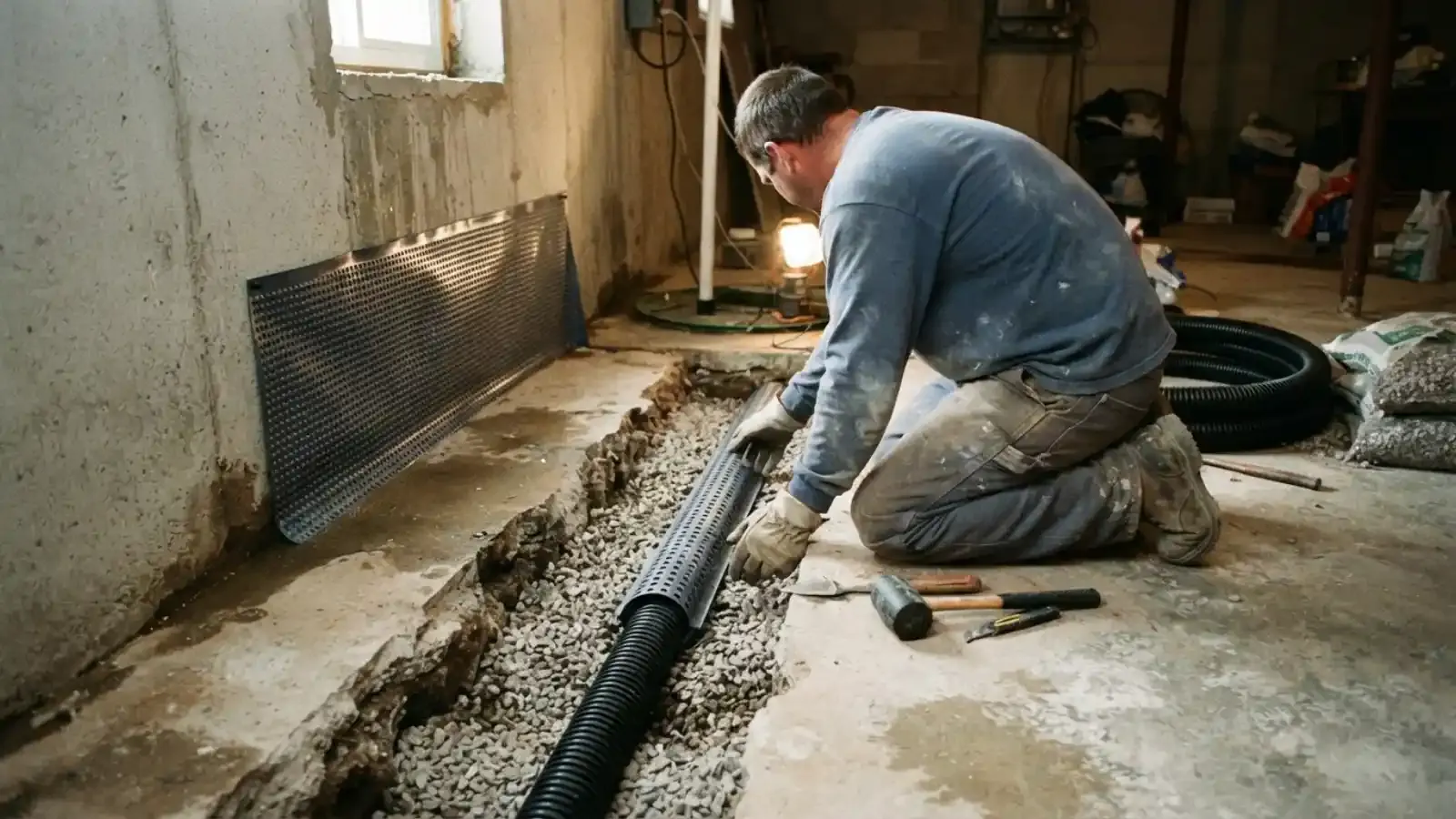
Interior drain tile and sump
A channel along the footing collects groundwater and sends it to a sump pit. This is a plumbing and drainage job.
Floor drain service
A floor drain with a dry trap lets sewer gas in. A backed-up floor drain needs cleaning or a backwater valve.
Backwater valve
This valve lets sewage flow out but blocks it from flowing back in during a main-line backup.
Discharge and grading advice
Where the water goes after the pump matters. We check the discharge and point out grading or gutter issues.
What belongs to other trades
Not every wet basement is a plumbing problem. Foundation cracks, exterior grading, gutter downspouts and window wells are often a mason, excavator or general contractor issue. We tell you when the fix is outside plumbing so you do not pay for the wrong repair.
If the basement floods because the sewer backs up, the answer is different again. See sewer inspection to find the blockage or break, and drain cleaning for the cleanout.
Humidity, condensation and the things that mimic leaks
Cold water pipes sweat in summer and drip onto the floor. A dryer vented into the basement adds moisture. An unsealed sump pit lid lets groundwater vapor into the air. Each of these looks like a leak and none is solved by digging up the floor.
Before spending on drainage, we check pipes for condensation, look at the dryer vent and see whether the sump is covered. Insulating cold pipes and sealing the pit lid are inexpensive steps. If the basement is still damp after those, a drainage system is the next step, and we size it to the problem we actually found.
Wet basement symptoms
| Symptom | Likely cause | Plumbing response |
|---|---|---|
| Water at floor-wall joint after rain | Groundwater pressure | Interior drain and sump. |
| Sewage smell at floor drain | Dry trap or sewer gas | Refill the trap, inspect the drain. |
| Water rises from drain in a storm | Main line overloaded | Backwater valve, call MDC. |
| White powder on walls | Moisture passing through masonry | Drainage and humidity control. |
Want a plan for a damp basement?
Call and describe what you see. We schedule an assessment.
East Hartford note: rivers, brooks and permits
East Hartford borders the Connecticut River and is crossed by brooks, and low-lying properties can see higher groundwater in wet seasons. That makes a sump system and a working discharge more important there than on high ground.
Interior drain and sump work may need a permit. Ask the Department of Inspections and Permits at (860) 291-7340 before the work begins. For sewer backups, MDC takes reports of main-line problems at (860) 278-7850.
Floor drains, backwater valves and sump systems are plumbing items covered by the International Plumbing Code (IPC). Connecticut adopts the 2021 IPC through its 2022 State Building Code.
What affects the cost of basement drainage work
Scope drives price more than anything.
Gradual seepage is typically not covered by homeowner insurance. Sudden discharge from a failed appliance or pipe may be.
Common questions
Yes. For active flooding, call the 24/7 line and see sump pump service. Planned waterproofing is scheduled.
The drainage, sump and sewer parts are. Foundation sealing and exterior grading may need other trades.
It lowers the water table around the footing. Humidity from air still needs a dehumidifier or ventilation.
It is a one-way valve in the sewer line that blocks backflow during a main-line surcharge.
Yes. See our Manchester page and Glastonbury page.