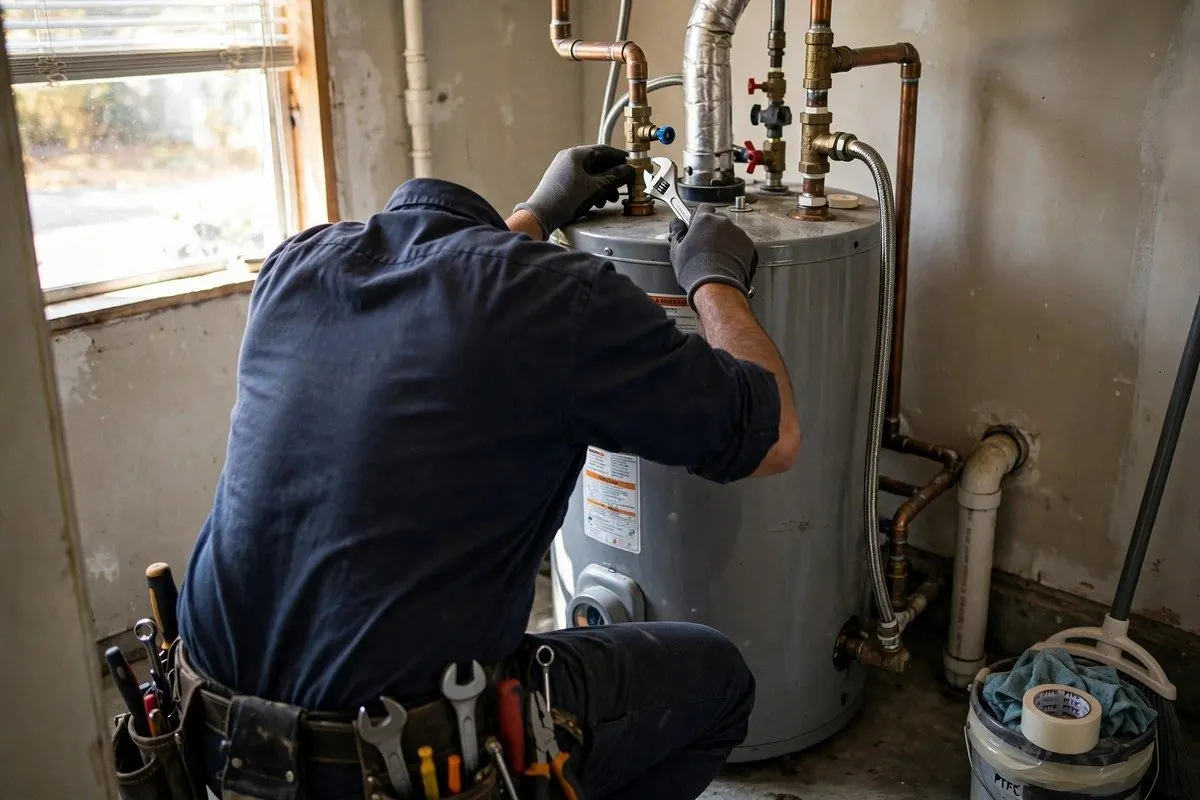
Start with the symptom
Water heater trouble sounds different depending on the cause. No hot water at all usually means the heating source has failed, such as a burner that will not light, a tripped breaker, or a dead heating element. Lukewarm water suggests a failed lower element or a sediment-choked tank. Popping and rumbling are the sound of water trapped under mineral scale.
A leak is a separate category. A drip from the temperature and pressure relief valve discharge pipe may be a valve doing its job under excess pressure. Water seeping from the tank body, the seam or the base is different, since a corroded tank cannot be repaired and must be replaced. We confirm which one you have before suggesting anything.
Gas, electric and hybrid heaters: what usually fails
The parts that wear out differ with the fuel.
| Type | Common failure | Typical fix |
|---|---|---|
| Gas tank | Thermocouple, pilot assembly, gas control valve or flue draft problem | Replace the failed part and test combustion and venting. |
| Electric tank | Heating element or thermostat | Replace the element or thermostat after testing with a meter. |
| Hybrid heat pump | Fan, condensate drain, sensor or backup element | Clear the drain, replace the part and verify the heat pump cycle. |
| Any tank | Anode rod depleted, sediment buildup | Flush the tank, replace the rod if the tank is otherwise sound. |
Repair or replace: how to decide
A repair makes sense when the tank is sound and the failure is a replaceable part. These points tip the decision.
- Tank ageMany tank heaters last roughly eight to twelve years. Past that, a repair buys less time.
- Where the water is coming fromA leaking fitting can be fixed. A leaking tank cannot. See water heater replacement.
- Cost of the part against the unitIf the repair is a large fraction of a new heater and the unit is old, replacement is usually the better value.
- Repeated failuresA second major repair within a year signals a tank near the end of its life.
Sediment, scale and what to ask about your water
Minerals settle at the bottom of a tank and bake into scale, which insulates the water from the burner or element. The heater works harder, makes noise and eventually fails early. Flushing the tank clears loose sediment before it hardens, and replacing the anode rod protects the steel while it still has life.
How fast scale forms depends on your water. MDC publishes an annual Water Quality Report and runs a laboratory you can contact at (860) 278-7850, extension 3901, with questions about what is in the water. Testing your own tap is the quickest way to learn whether hard water is shortening your heater's life.
Cold water and a cold house?
Call the 24/7 line. A technician can diagnose and often repair the same visit.
East Hartford note: permits and licensing for water heater work
The East Hartford Department of Inspections and Permits lists plumbing systems such as water heaters among the work that usually needs a permit. A like-for-like repair often differs from a replacement, so call (860) 291-7340 before the job to ask. The town also states that the property owner, not the contractor, is responsible for any violation.
To verify a plumber, search the Connecticut Department of Consumer Protection eLicense lookup at elicense.ct.gov. A P-1 license is the unlimited plumbing contractor class.
Temperature and pressure relief valves and their discharge pipes are regulated by the International Plumbing Code (IPC). Connecticut adopts the 2021 IPC through its 2022 State Building Code, and we check the relief valve on every heater visit.
What affects the cost of water heater repair
Most repairs are a part plus labor.
Insurance generally covers resulting water damage from a sudden tank failure but not the failed heater itself. Photograph the damage before cleanup.
Common questions
Yes. A leaking tank cannot wait, and no hot water in winter is urgent. The line is staffed around the clock, including holidays.
Yes. Close the cold-water supply valve on top of the tank and switch off the power or gas control. This stops the flow and prevents the burner or element from running dry.
A failed lower element, a sediment-filled tank or an undersized unit can all cause it. A technician will test the elements, check sediment and compare the tank size to your household use.
Yes. See tankless water heater service for installation, repair and descaling.
Sometimes. If the tank is sound and the failure is a single part, a repair can make sense. We tell you the cost of both paths before you decide.