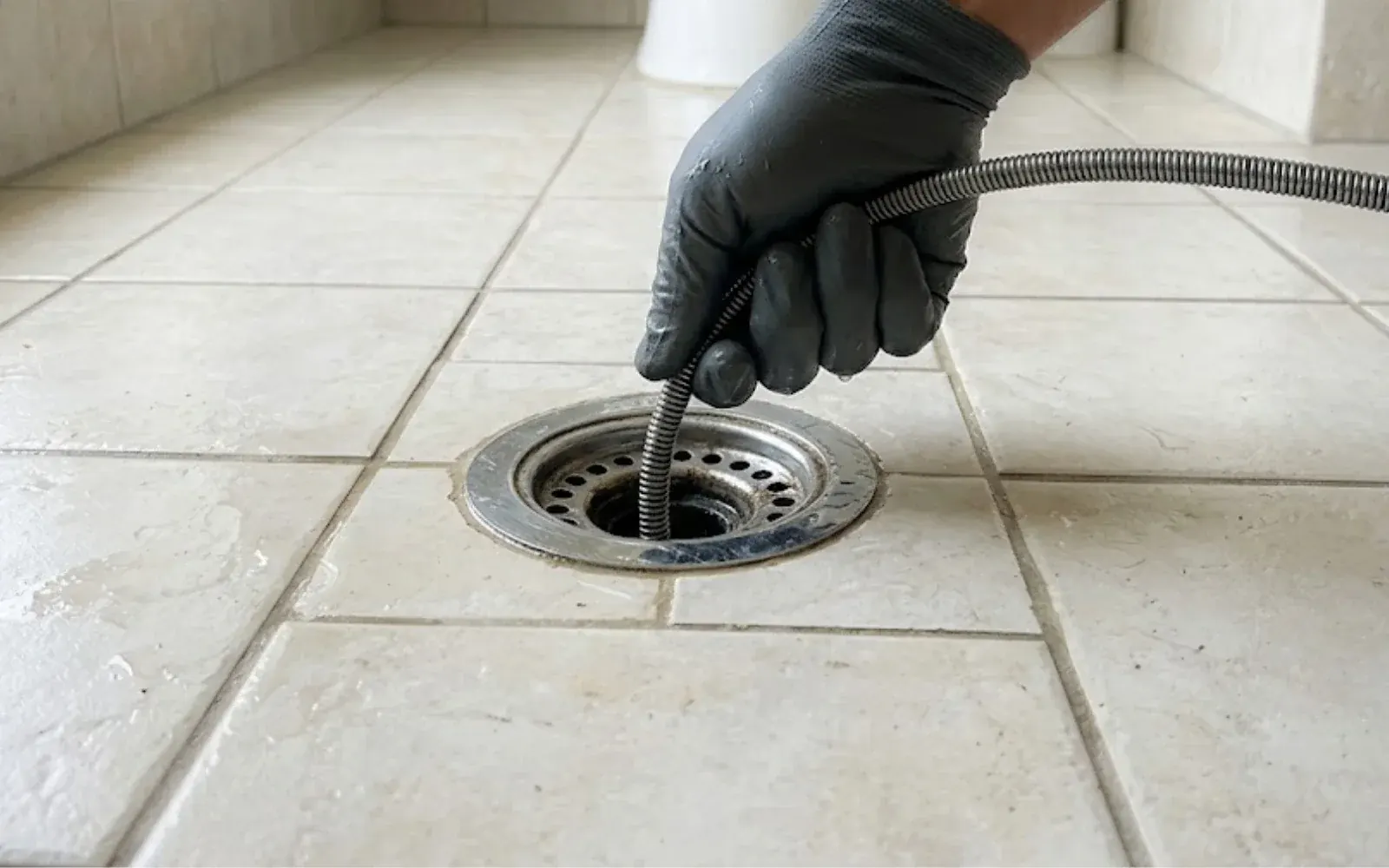
When a clogged drain becomes an emergency
A single slow sink can usually wait until morning. Water coming up through a floor drain, a toilet that gurgles when the washer drains, or a tub that fills with gray water when you flush are different. Those signs point to a blockage deeper in the line, and the next load of water has nowhere to go but back into the house.
Callers describe the same pattern again and again. The kitchen sink backs up first, then the basement floor drain starts to rise. If you see that sequence, stop using water everywhere in the house. Every gallon you add is a gallon the clog pushes back toward the lowest opening.
Our dispatchers ask four things: which fixtures are affected, how fast the water is rising, whether anything has been poured down the drain, and whether the house has a basement. Those answers decide whether a technician brings a hand auger, a drum machine for the main line, or a jetting setup. We also use them to tell you what to do until the truck arrives.
What the clog is telling you
One fixture is slow
The blockage is almost always in that fixture's own branch, such as hair in a tub trap or grease in the kitchen line. A cable through the trap arm usually clears it in one visit.
Several fixtures are slow
This points to the main drain or the house sewer. Roots, a collapsed section or a buildup of paper and wipes are the usual causes. The fix needs a longer cable or hydro jetting.
Gurgling and bubbling
Air is being pushed back through traps because water cannot move past a blockage. It often shows up in a nearby toilet when the washer or dishwasher drains.
Sewage smell or backup in the lowest drain
Treat it as urgent. The basement floor drain is the first outlet for a blocked main, and the water is not clean. Keep children and pets away from it.
Kitchen sinks: grease, food and what a cable cannot fix
Kitchen lines clog differently from bathroom lines. Fat cools inside the pipe wall and narrows it a little more with every dish load, until a bit of rice or coffee grounds finishes the job. A cable can punch through the plug, but the grease coating remains.
If the sink clogs again within a few weeks, the line needs a proper cleaning with a heavier blade or hot-water jetting, not another quick pass.
Garbage disposals make this worse because they push fibrous waste such as celery, potato peels and egg shells into a narrow trap. If a disposal sits on the clogged sink, the plumber will check the disposal outlet and the trap arm before cabling the wall line. A related page covers garbage disposal repair when the unit itself has failed.
Which cleaning method fits which clog
The method depends on where the blockage sits and what it is made of.
| Method | Best for | Limits |
|---|---|---|
| Hand auger or sink cable | Hair, soap and a single fixture trap | Does not reach a main line and leaves wall grease in place. |
| Drum machine with cutting head | Main drain clogs, roots in small amounts, paper buildup | Pokes a hole through the clog and may need a repeat visit if the pipe is rough. |
| Hydro jetting | Grease, scale and heavy sediment along the full pipe wall | Needs a sound pipe and a cleanout or access point. See hydro jetting. |
| Camera inspection | Repeat clogs, suspected breaks or offsets | A diagnosis, not a cleaning. See sewer camera inspection. |
Water rising in a drain right now?
Call the 24/7 line. A dispatcher will walk you through what to shut off while a plumber is on the way.
East Hartford note: MDC owns the main, you own the lateral
In East Hartford the sewer main in the street belongs to the Metropolitan District Commission (MDC). The pipe that runs from your house to that main, called the lateral, is your responsibility. MDC says on its own sewer page that ownership and maintenance of the lateral is the homeowner's job.
That split matters during a backup. If every drain in the house is backing up, call the MDC Command Center at (860) 278-7850 and press 1, because the blockage may be in the main and MDC would clear it. MDC also states it will not assume liability if an owner or plumber works on the line before calling MDC first.
We make that call part of the first conversation so you do not pay to clear a pipe that was never yours.
Traps, vents and drain slope follow the International Plumbing Code (IPC), which the 2022 Connecticut State Building Code adopts in its 2021 edition. A good drain clearing leaves those parts exactly as the code expects.
What affects the cost of drain cleaning
Every clog is different, so we quote after we know where it sits. These are the factors that move the price.
Homeowner policies often exclude the cost of clearing a clog itself but may cover resulting water damage, depending on the policy. Ask your insurer before you file.
Common questions
Yes. The line is staffed around the clock, including nights, weekends and holidays. Tell the dispatcher which drains are affected and whether water is rising, and a plumber is scheduled for the earliest slot available.
If only one fixture is slow, the problem is almost certainly inside your house. If every drain is backing up, the main may be blocked. Call the MDC Command Center at (860) 278-7850 and press 1 to report it, then call us if MDC says the problem is on your side.
Rarely. Chemical openers can sit in a standing pipe, damage older fittings and make the next plumber's job unsafe. If a clog survives one round, stop and call a plumber.
Grease and food residue coat the pipe wall, so a cable only opens a small channel. A full cleaning or hydro jetting removes the coating.
Yes. We work with tenants, landlords and property managers. Tell us who authorized the call, since the owner or association may need to approve the work.