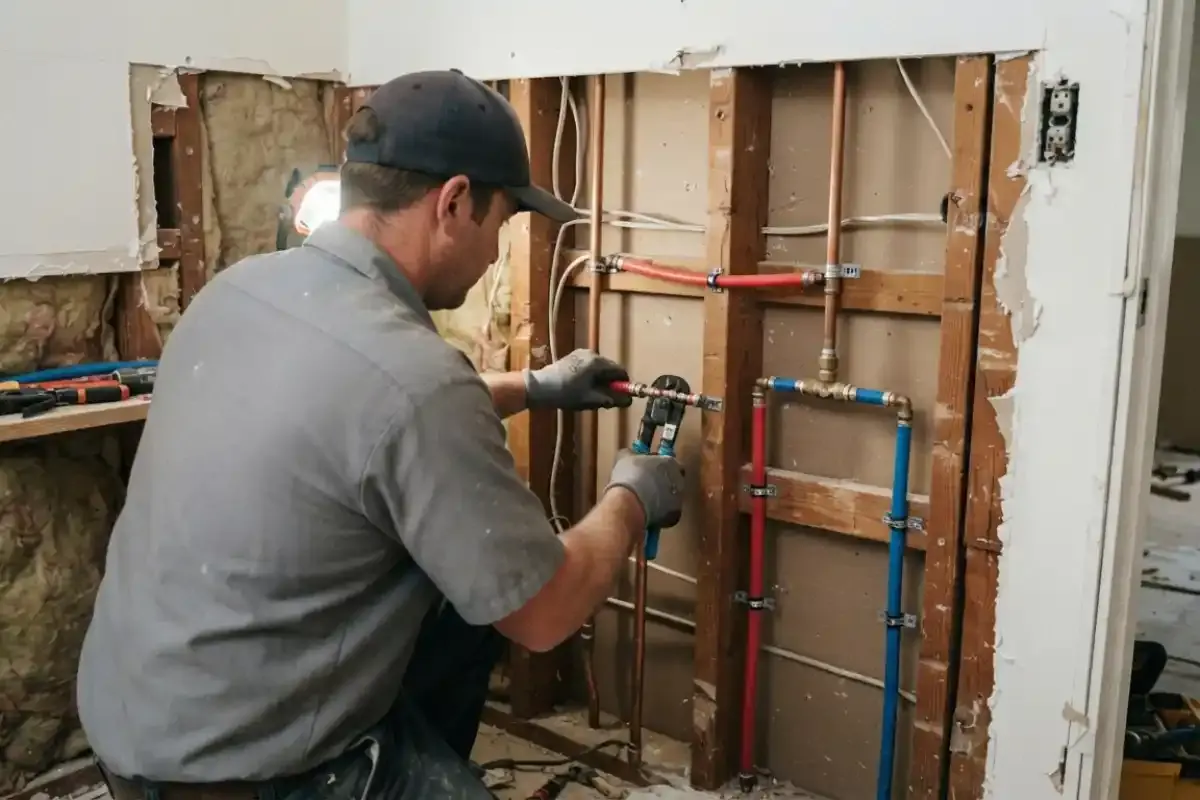
Signs it is time to repipe
One leak is a repair. Several leaks in a year are a pattern. If pinholes keep appearing in different spots, the pipe is failing from the inside and patching each one costs more over time than replacing the system.
Other signs include rust-colored water on first use, low pressure at several fixtures, visible green or white corrosion on pipes and old galvanized steel that has narrowed inside. A plumber can inspect exposed pipe and cut a sample section to see the inside.
Material choices
Copper
Durable, long-lived and familiar. It costs more in materials and takes more labor to solder.
PEX
Flexible plastic tubing that runs through walls with fewer fittings. It is faster to install and less likely to burst from freezing, though not immune.
CPVC
Rigid plastic, lower cost, but can become brittle with age and heat.
Mixed approach
Some homes use PEX in walls and copper at exposed sections. We explain the trade-offs for your house.
How a repipe works
Inspect and plan
We walk the house, find the main, note fixtures and plan routes for the new pipe.
Protect the home
Floors and furniture are covered, and access holes are kept small.
Install the new lines
New supply pipes are run to every fixture while the old system is isolated.
Test and patch
The system is pressure tested. Drywall access holes are patched or left ready for a drywall contractor.
Living through a repipe
Repiping disrupts a household for a few days, so planning helps. We agree on the order of rooms, keep one bathroom usable where we can and tell you when the water will be off. Pets and small children should be kept clear of the work areas, and valuables near walls should be moved before we arrive.
After the new pipes are in, the system is flushed and pressure tested before walls are patched. Expect some drywall dust and some noise. Ask for the access holes to be placed where a drywall contractor can finish them easily, such as inside closets and behind fixtures.
Repiping is also a good time to add shutoff valves at every fixture, replace a failing pressure regulator and fix any pipe that was routed through an exterior wall where it can freeze. Those small additions cost little during the project and are expensive to add later.
Copper and PEX compared
| Factor | Copper | PEX |
|---|---|---|
| Install time | Longer | Shorter. |
| Wall damage | More access cuts | Fewer access cuts. |
| Freeze tolerance | Can burst | Better, can still fail. |
| Lifespan | Decades | Decades. |
Considering a repipe?
Call and describe the leaks or pressure problems. We schedule an inspection.
East Hartford note: permits and old homes
East Hartford has many homes built in the mid-twentieth century, and some still have original supply piping. Whether a whole-house repipe needs a permit is a question for the Department of Inspections and Permits at (860) 291-7340, and the work must follow the Connecticut State Building Code, which adopts the International Plumbing Code.
If you are on MDC water, ask the utility or review its Water Quality Report at (860) 278-7850 ext. 3901 if you want to know what the water does to pipe. Corrosion also depends on the pipe, not just the water.
New supply piping must be approved for potable water and sized under the International Plumbing Code (IPC). Connecticut adopts the 2021 IPC through its 2022 State Building Code, which is why a repipe is normally permitted.
What affects the cost of repiping
A repipe is a major project, so scope matters.
Sudden pipe bursts can be covered by home insurance. Planned replacement of aging pipe usually is not.
Common questions
Yes. Call the 24/7 line for a burst. Repiping is scheduled once the emergency is under control.
Often a few days, depending on size and access. We plan the water shutoff times with you.
PEX needs smaller access holes than copper. We limit cuts and tell you what to expect.
You can usually stay, but the water is off for part of each day.
Yes. A partial repipe replaces the worst runs. We advise based on the pipe condition.