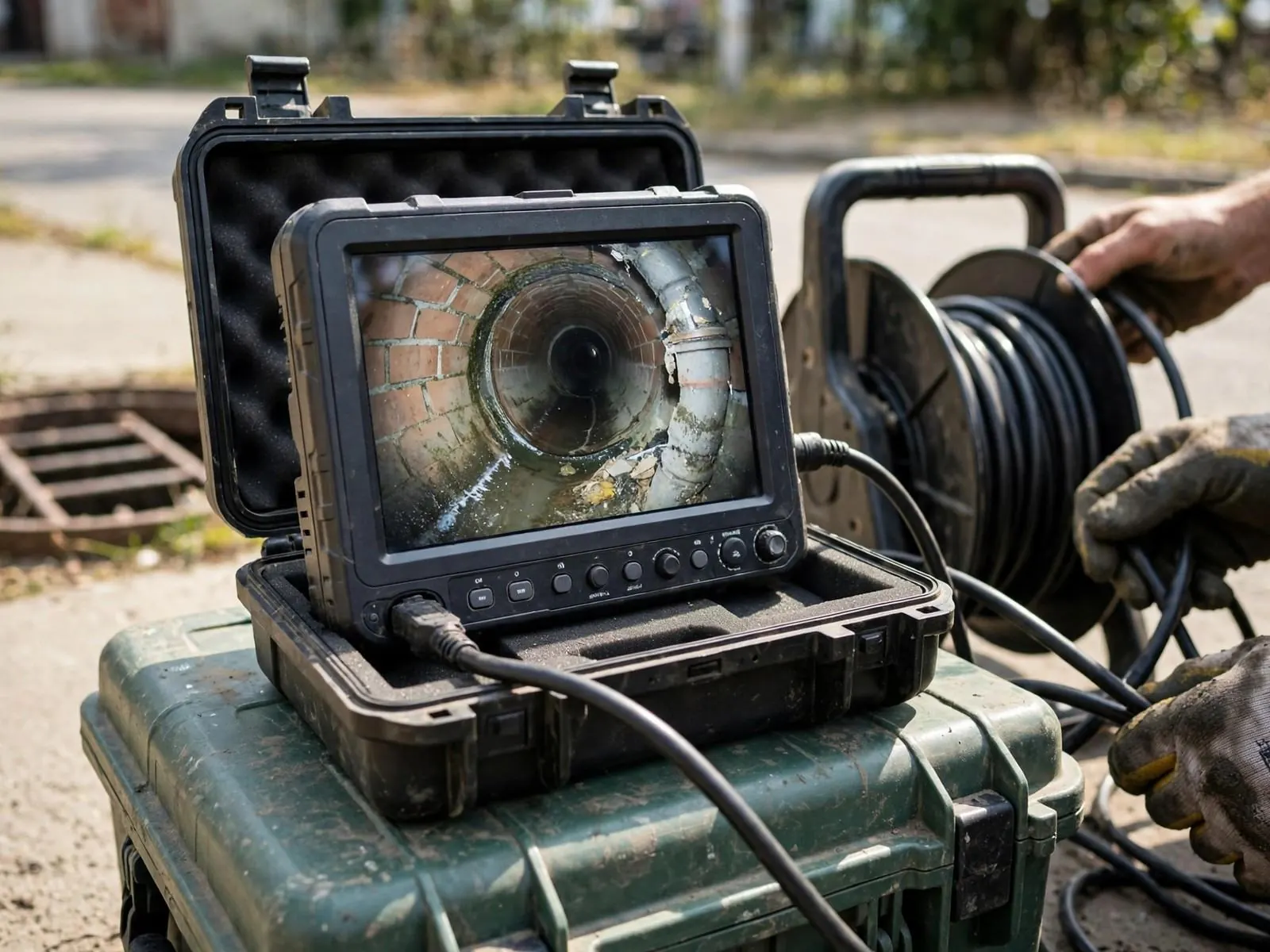
What the camera does
A flexible cable carries a camera and a light through the cleanout or a drain opening. A monitor shows the inside of the pipe. A locator on the surface can find the exact spot and depth of a problem so that repair work is limited to the damaged section.
You see the pipe material, the joints, the slope and any obstruction. A recording lets you share the results with an insurer, a seller or another contractor. See our sewer inspection page for how we run the service.
What it can find
Tree roots
Roots enter at joints and grow into a mass that catches debris.
Cracks and breaks
Settling and age crack older clay or cast iron pipes.
Bellies
Low spots where water and waste sit and cause repeat clogs.
Offset joints
Sections that have shifted apart and snag waste.
When to book an inspection
| Situation | Why a camera helps |
|---|---|
| Repeat clogs in the same line | Finds the cause, not just the symptom. |
| Buying an older home | Reveals condition before you close. |
| Sewer smell outdoors | May show a break or open joint. |
| Before lining or replacement | Defines the repair scope. |
Reading the results
A good inspection includes a footage review with the plumber, a clear statement of what was found and a recommendation. Minor findings such as light scale may only need cleaning. Roots and bellies may need cutting or jetting. A broken pipe may need spot repair or replacement.
Ask for a written note of the location, measured from the cleanout. That helps if you later compare quotes. If repair is recommended, see sewer line repair for the options, and hydro jetting if cleaning is enough.
What a good inspection report includes
Ask the plumber for a written summary alongside the video. It should note the line material, the length inspected, the location of any defect measured from the cleanout and a plain statement of severity. Photos or clips of each issue are better than a long continuous video that is hard to review.
Severity matters. A hairline crack that is not leaking is different from a joint offset that catches paper. A light root intrusion that can be cut once a year is different from a collapsed section. A clear report lets you decide between maintenance, spot repair and replacement without feeling rushed.
Ask what the plumber would do and why. For example, if roots are present, cutting clears them but they return. A repair or liner removes the entry point. A plumber who explains both options and the cost difference is showing respect for your decision. Get a second opinion on any large repair, and share the video so the other contractor sees the same pipe.
Finally, ask about cleaning before the camera. A line packed with grease or debris blocks the view, so a cleaning pass often comes first. That is normal and not an upsell. Once the camera passes, keep the recording with your house records. It becomes a baseline you can compare against years later, and a buyer or insurer may ask for it.
For homes bought in the last few years, ask whether the seller provided a video. Do not rely on an old one if there have been backups since. The pipe can change, and a current look is cheap compared with a surprise.
If the inspection finds a problem, ask what happens if you wait. Some defects can be watched with an annual look, and others, such as a collapsed section, should be repaired soon. Knowing the difference lets you plan the work and the budget instead of reacting to a backup at the worst moment.
Schedule the inspection at a time when the line has not just been heavily used. A quiet period gives the camera a clearer view and the plumber a fair read of how the pipe behaves normally.
East Hartford note: who owns which pipe
MDC says the sewer main belongs to MDC and the lateral from the house to the main belongs to the homeowner. A camera inspection tells you the lateral's condition and whether the issue may be at the connection. For a suspected main-line problem, call MDC at (860) 278-7850, press 1.
Repairs in the street or at the connection may need coordination or a permit. Ask the East Hartford Department of Inspections and Permits at (860) 291-7340.
A camera inspection checks slope, joints and material against what the International Plumbing Code (IPC) expects, as adopted in its 2021 edition by the 2022 Connecticut State Building Code.
Want a look inside your sewer line?
Call to book a camera inspection.
Prepare for an inspection
A few steps help the visit.
Ask where the cleanout is. If you cannot find one, tell us.
List which fixtures back up and when.
Move items around the cleanout.
Request a copy of the footage.
Nearby towns
We inspect lines across the region. If you live in Hartford or Manchester, the local sewer authority differs, so tell us the address.
Common questions
Often under an hour, depending on access and line length.
No. It is designed for drain lines and moves gently.
Yes. It shows where the obstruction sits and what it is made of.
It is a smart step for older homes, because sewer repairs can be costly.
Yes, for active backups. Call the 24/7 line.