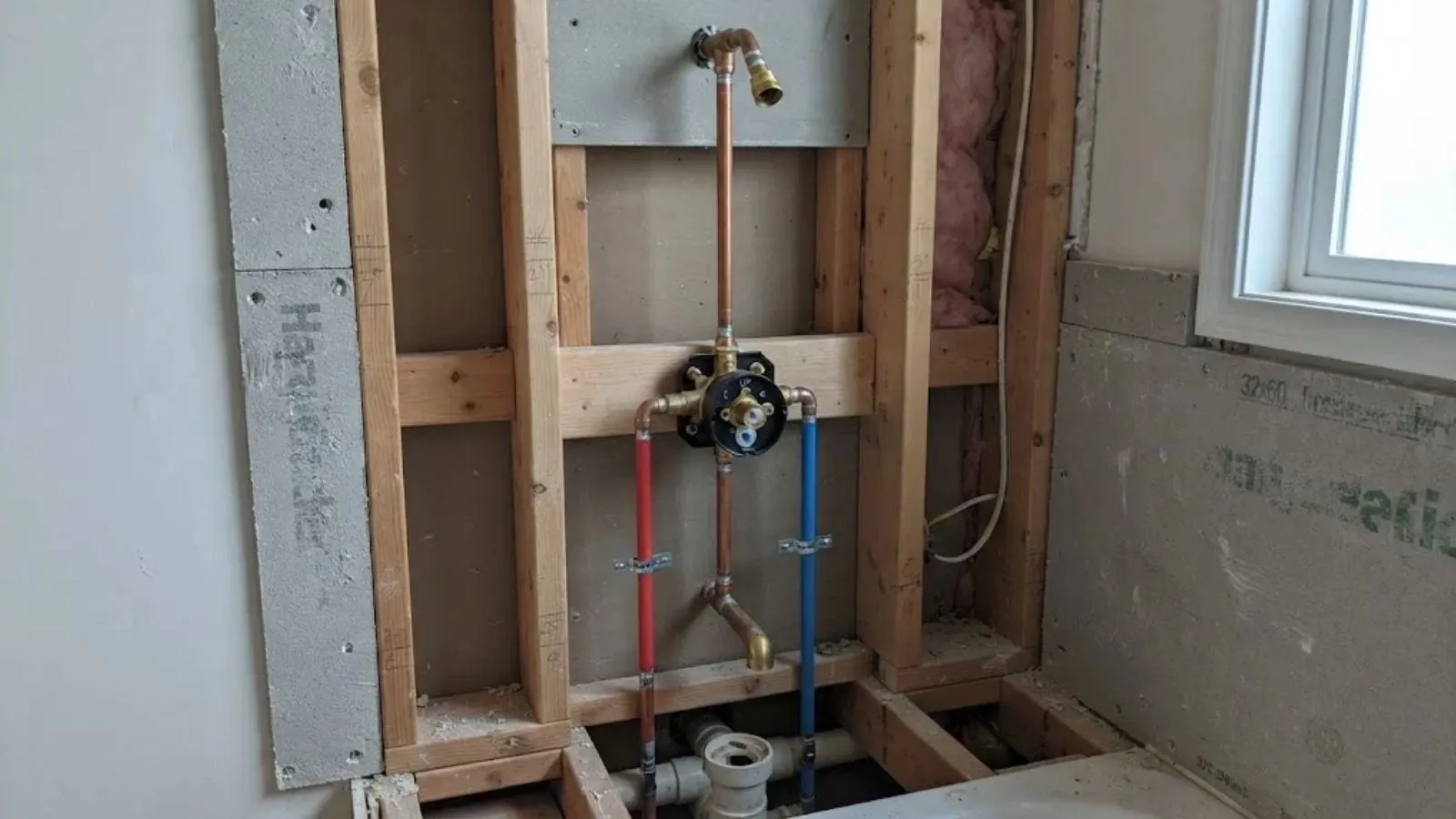
The parts of a shower rough-in
A shower has four plumbing parts. The valve controls temperature and flow. The supply lines bring hot and cold water to the valve. The shower arm and head deliver the water. The drain takes it away through a trap that holds a seal against sewer gas.
The rough-in happens before the walls close. That is when the valve is set at the right depth for the tile, the drain is set at the right slope and pressure tested. A mistake here is expensive to fix after tile goes up. See plumbing installation for the services we provide.
Rough-in sequence
Plan the layout
Mark the valve height, showerhead height and drain location.
Run the drain and vent
Set the trap and connect the drain to the stack with the correct slope and vent.
Set the valve
Mount the mixing valve on solid blocking at the depth the tile setter needs.
Run supply lines
Connect hot and cold to the valve with shutoffs where possible.
Pressure test
Test the lines and fill the pan to check the drain before closing the wall.
Valve types
| Valve | What it does | Notes |
|---|---|---|
| Pressure balancing | Adjusts for pressure changes | Common, protects from scalding. |
| Thermostatic | Holds a set temperature | Higher cost, very steady. |
| Diverter or multi-function | Switches outlets | Needed for body sprays. |
| Two-handle | Separate hot and cold | Simple and serviceable. |
Drains, slopes and curbs
A shower floor must slope toward the drain. Too little slope leaves standing water, and too much feels odd underfoot. A tile shower needs a waterproof pan or membrane under the tile, and the drain must tie into it properly.
A basement shower often sits below the main drain. In that case a sewage ejector or a special pump is needed, and the plumbing is more complex. If water behind a wall is a concern, leak detection helps find moisture early, and a shower that has been leaking for a long time may be a fixture or valve problem rather than a pan problem.
Planning with the tile setter and the framer
The plumber works between the framer and the tile setter, so the sequence matters. The framer provides blocking at the valve and shower arm heights. The plumber sets the valve and drain and tests the lines. The waterproofing installer builds the pan or membrane. The tile setter then finishes the walls and floor. If any step is missed, the next trade inherits the problem.
Agree on valve depth early. The valve must sit so the trim covers the tile edge neatly. Too deep and the trim sticks out. Too shallow and the handle may not fit. The valve manufacturer lists a depth range, and the tile thickness decides where in that range you land.
Plan access for future repair. A cartridge will wear out eventually, and a valve stuck behind solid tile is a costly repair. An access panel on the back side of the wall, in a closet or an adjoining room, makes replacement easy. Mention it to the plumber before walls close, and ask for the valve model to be recorded for your files.
Finally, plan the finish plumbing at the end. After the tile cures, the trim, shower head and drain cover go on, and the plumber tests the valve temperature and flow. Set the maximum temperature stop on the valve to a safe level before the family uses the shower for the first time.
East Hartford note: permit, license and code
Moving or adding a shower usually involves permits. Ask the East Hartford Department of Inspections and Permits at (860) 291-7340. Connecticut plumbers are licensed at the state level, and a license can be checked at elicense.ct.gov. Work follows the state building code and its plumbing provisions.
If your house is on the MDC sewer, the new shower tie-in to the drain stack is private work, and MDC owns the main. Ask us when you call about where the stack and cleanouts are.
Shower valves must control scalding under the standards referenced by the International Plumbing Code (IPC), adopted in its 2021 edition by the 2022 Connecticut State Building Code, and the drain, trap and vent follow the same code.
Planning a bathroom project?
Call and describe the layout. We schedule a visit before walls open.
Questions to settle before demolition
Answer these with your plumber and tile setter.
- Where is the drain going?Moving it costs more than keeping it.
- Who supplies the valve?Decide before rough-in, because tile depth depends on it.
- Is the supply big enough?Rain heads and body sprays need larger lines.
- Who tests the pan?A flood test before tile saves trouble.
Nearby towns
We do remodel plumbing across the area. For homes in South Windsor or West Hartford, the local permit office is different from East Hartford's, so tell us the address.
Common questions
Rough-in for a straightforward shower often takes a day. Moving a drain or adding a pump takes longer.
Often yes, if it is in good shape and the shower sits above it. We check the slope and size.
Call the permit office at (860) 291-7340. Moving plumbing generally needs one.
A pressure balancing valve is common. A thermostatic valve gives steady temperature at higher cost.
Yes. We assess the drain depth and whether a pump is required.